 French Bonsai Amateur
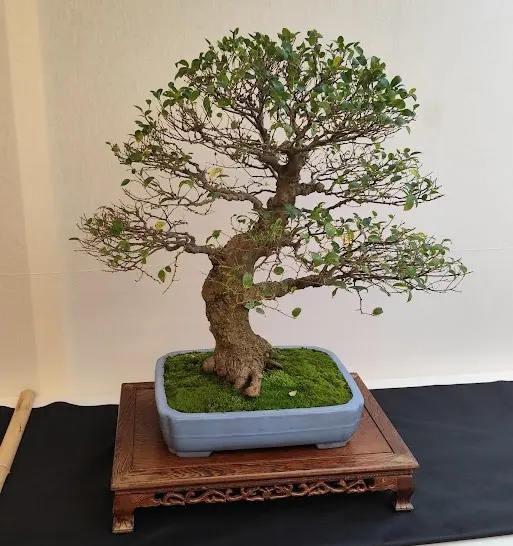
The trunk movement is the guiding line of the bonsai. It can be straight, sinuous, leaning or dramatic. What matters is that it feels fluid and natural, never forced.
Here, I use `aesthetics` as a broad section: reading principles, styles and pot choice all belong to the same question, which is the visual presence of the tree.
“A convincing bonsai is not only about technique. It also depends on what it conveys.”
John Naka
Path
If you want to understand the visual coherence of a bonsai, start here with the principles. If you want to compare silhouettes, move toward styles. If you want to finalize or correct the general image, pass through the pots.
This section is meant to be read like a small triptych: this page for the principles, Styles for silhouettes, Pots for visual finishing. You can enter through any door and move between the three.
Principles
Beyond techniques, it is harmony, simplicity and the natural expression of the tree that give a bonsai its visual strength.
The trunk movement is the guiding line of the bonsai. It can be straight, sinuous, leaning or dramatic. What matters is that it feels fluid and natural, never forced.
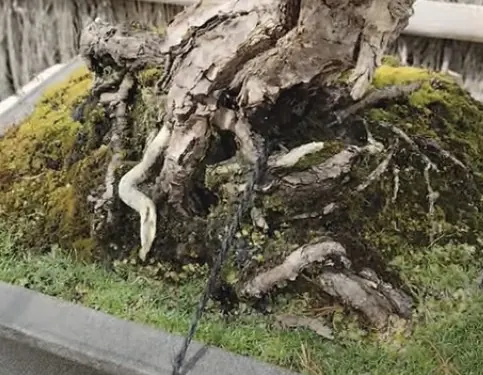
Nebari is the widening of the trunk at soil level. It gives stability and a sense of age. A balanced, gently flared nebari strengthens the visual anchoring of the bonsai.
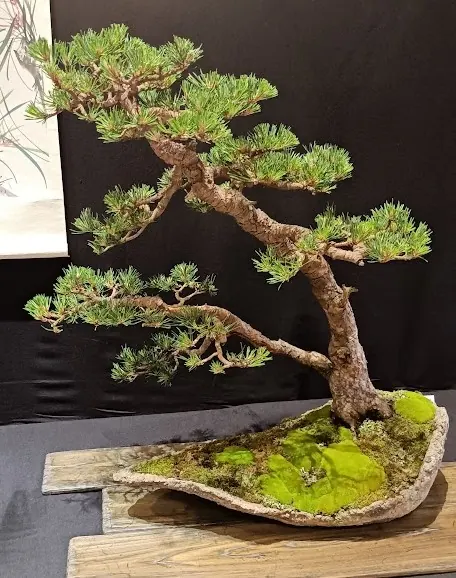
The empty space around and between the branches is not a lack: it is a reading tool. It lets the composition breathe, highlights movement and prevents a tree from feeling heavy or confused.
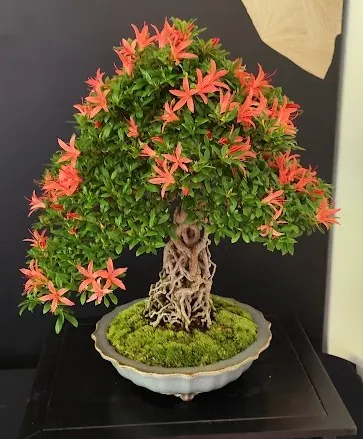
Many traditional bonsai rely on a triangular composition: trunk, main branch, secondary branch. It creates visual stability and a natural balance.
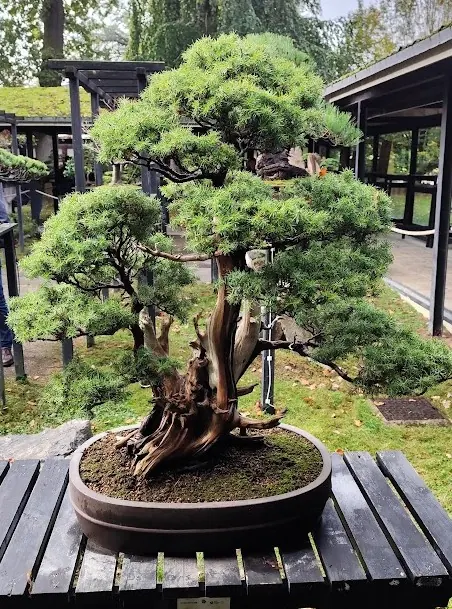
The front is chosen to highlight trunk movement, nebari, depth and the opening of the foliage. It is a reading decision, not just a photo angle.
Aesthetics becomes stronger when you move from the general principle to the concrete case: which shape, which pot, for which tree.
Harmony is born from the balance between the trunk, nebari, empty space, ramification, the pot and the overall coherence of the composition.
Because they all contribute to the visual reading of the tree. Styles organize the silhouette, pots reinforce presence, and principles provide the reading framework.
It gives a sense of stability, age and visual anchoring. Without readable nebari, a tree often loses credibility.
You choose the side that best highlights the trunk, the base, the depth and the opening of the foliage, not necessarily the one that shows the most branches.